
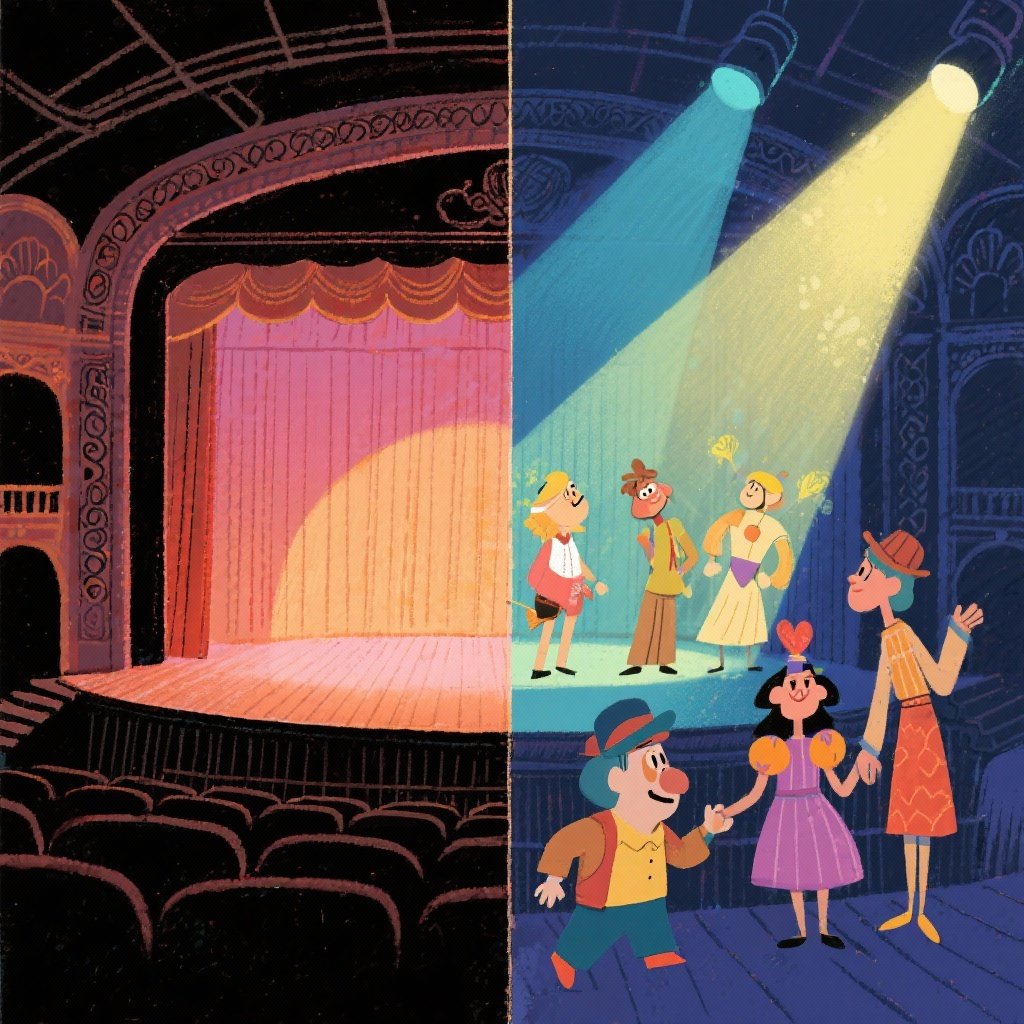
The worlds of theatre and animation may seem very different at first—one is performed live on stage, while the other exists on screens through drawings and digital effects. Yet, many of the techniques that make modern animation powerful, emotional, and memorable come directly from theatre. From character movement to storytelling structure, theatre has played a major role in shaping how animated stories are created and experienced today.
The Shared Foundation of Storytelling
At its core, both theatre and animation are about storytelling. Theatre has always relied on clear narratives, strong character arcs, and emotional pacing to keep audiences engaged. These same principles are essential in animation.
Many animated films and series follow a three-act structure, a storytelling format popularized in classical theatre:
-
Act 1: Introduction of characters and setting
-
Act 2: Conflict and development
-
Act 3: Resolution and conclusion
This theatrical structure helps animated stories feel complete, balanced, and emotionally satisfying.
Character Performance and Expressive Movement
One of the strongest influences of theatre on animation is performance. In theatre, actors use exaggerated body language, facial expressions, and gestures so the audience can clearly understand emotions—even from a distance.
Animation applies this same idea. Animators often study stage acting to learn:
-
How posture reflects personality
-
How movement shows emotion
-
How timing enhances comedy or drama
Classic animation principles like exaggeration, anticipation, and pose-to-pose movement are deeply inspired by theatrical acting techniques.
Voice Acting: A Theatrical Art in Animation
Voice acting in animation is closely tied to theatre traditions. Many voice actors have stage backgrounds, which helps them deliver expressive and believable performances without relying on physical appearance.
Theatre-trained voice actors understand:
-
Vocal projection and clarity
-
Emotional timing
-
Character consistency
This is why animated characters often feel alive and emotionally real, even without a physical actor on screen.
Stage Design and Visual Composition
Theatre has long used set design, lighting, and spatial arrangement to guide audience attention. Modern animation borrows heavily from these concepts.
In animation:
-
Scenes are composed like stage sets
-
Lighting is used to highlight mood and focus
-
Backgrounds support the story without overpowering characters
Many animated films use theatrical blocking, arranging characters in a scene the same way a director would position actors on a stage.
Musical Theatre’s Impact on Animated Storytelling
Musical theatre has had a huge influence on animated films, especially in family and fantasy genres. Songs in animation often function the same way they do in stage musicals:
-
Introducing characters
-
Expressing inner thoughts
-
Moving the plot forward
This approach makes stories more engaging and emotionally rich, helping audiences connect deeply with animated characters.
Emotional Connection and Audience Engagement
Theatre teaches creators how to build a strong emotional bond with the audience. Live performances depend on audience reaction, and this awareness of emotional flow is reflected in animation.
Animators carefully plan:
-
Emotional highs and lows
-
Moments of silence or reflection
-
Climactic scenes that feel earned
This theatrical sensitivity helps animated stories feel meaningful rather than purely visual.
Theatre Training in Modern Animation Studios
Many animation studios actively encourage artists and animators to study theatre. Life drawing sessions, acting workshops, and performance studies are common in professional animation environments.
By understanding how humans move and express emotion on stage, animators can create characters that feel natural, relatable, and expressive.
Conclusion
From storytelling structure to character performance, theatre has deeply influenced modern animation. What began on the stage—expressive acting, emotional pacing, and visual composition—has evolved into powerful animated experiences on screen. As animation continues to grow, its theatrical roots remain essential, reminding us that even in a digital world, human performance and storytelling still matter most.
FAQs
How does theatre influence animation storytelling?
Theatre provides strong narrative structures, character arcs, and emotional pacing that are commonly used in animated films and series.
Why do animators study acting and theatre?
Studying theatre helps animators understand movement, emotion, and timing, which makes animated characters feel more realistic and expressive.
Is voice acting related to theatre?
Yes, many voice actors come from theatre backgrounds, which helps them deliver clear, emotional, and consistent performances in animation.
How does stage design affect animation visuals?
Animation uses theatrical concepts like set design, lighting, and blocking to create visually clear and emotionally engaging scenes.
Why are songs important in animated films?
Songs, inspired by musical theatre, help express emotions, introduce characters, and advance the story in a memorable way.
Will theatre continue to influence future animation?
Absolutely. As long as animation focuses on storytelling and human emotion, theatre will remain a key influence.